
Codependency Recovery: Beginning the Journey Back to Yourself
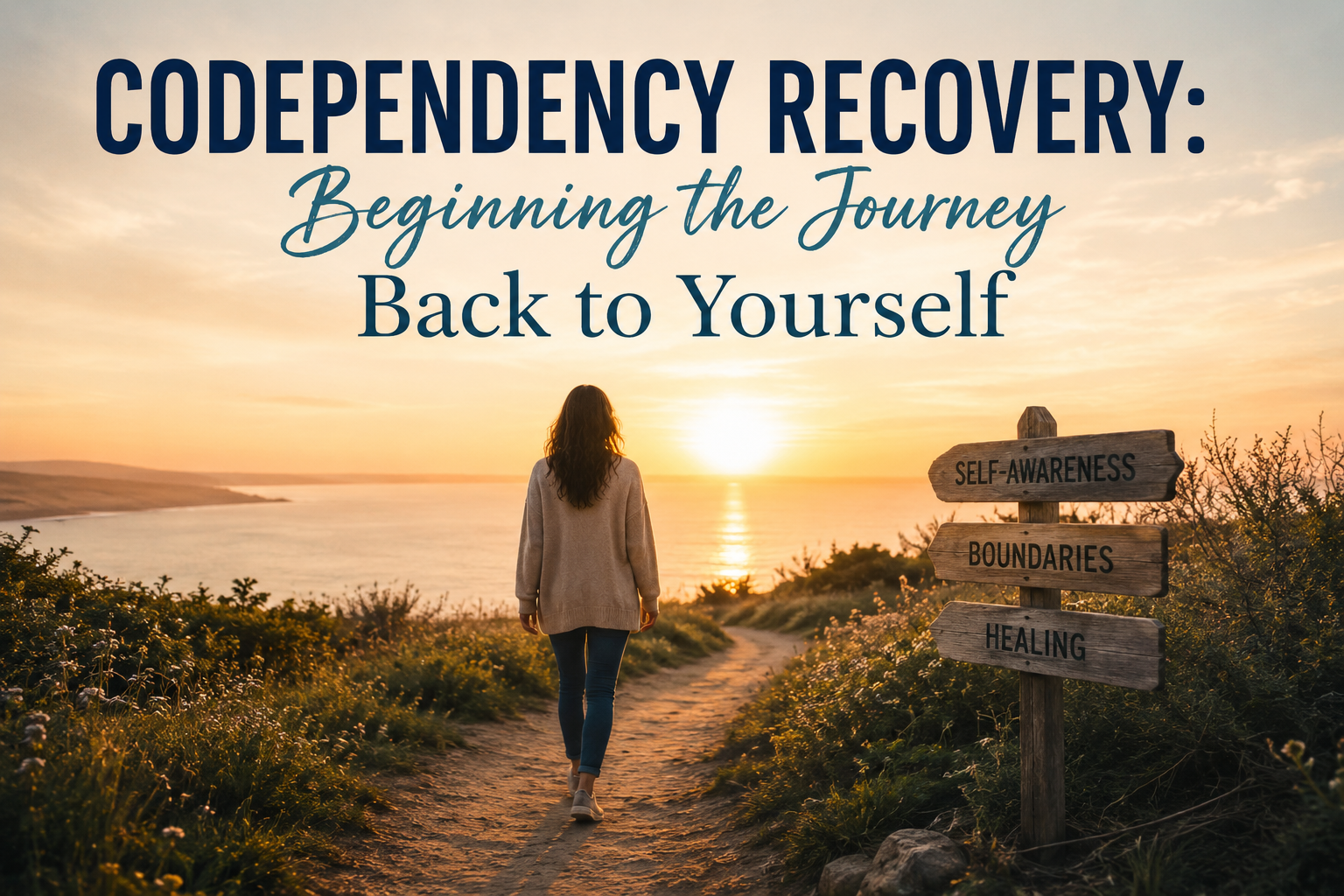
Healing from Self-Abandonment, People-Pleasing, and the Fear of Losing Love
Most of us enter recovery with one goal in mind: to stop the suffering that brought us here in the first place. For many of us, that suffering came through unhealthy relationships, people-pleasing, controlling behaviors, abandonment fears, loss of identity, emotional dependency, perfectionism, or constantly sacrificing ourselves for others.
As newcomers, many of us would be relieved simply to experience less chaos, less anxiety, and less emotional pain. We want to stop losing ourselves in other people. We want to stop abandoning ourselves in order to feel loved, accepted, or safe.
You are reading this because there is a part of you — a spark of wisdom and truth — that desires freedom from the suffering of codependency. By seeking recovery, you have already taken the first step toward healing and awakening.
Every person who reaches for recovery, no matter where they are on their journey, has touched that courageous and authentic part of themselves that years of shame, fear, rejection, or unhealthy relationships could never destroy.
The Survival Patterns of Codependency
Many of us carry deep emotional wounds from childhood, trauma, neglect, abandonment, or unstable relationships. We learned to survive by becoming caretakers, fixers, rescuers, peacekeepers, performers, or protectors.
We learned to focus on others while disconnecting from ourselves. We adapted by suppressing our feelings, ignoring our needs, and seeking validation outside ourselves. We often believed our worth depended on how much we could give, how needed we were, or how well we could prevent conflict and rejection.
We tried to protect ourselves by wearing masks, controlling situations, avoiding vulnerability, over-functioning for others, or emotionally withdrawing when we felt unsafe. Beneath these patterns, however, there remains a part of us that is still whole.
Recovery Begins with Remembering Who We Are
Recovery begins when we slowly allow ourselves to believe that we are more than our survival patterns. Beneath the fear, shame, people-pleasing, control, and heartbreak is our true self — worthy, lovable, grounded, and enough exactly as we are.
Who were we before we learned to abandon ourselves for love?
Who are we beyond our fear of rejection or loneliness?
Who are we beneath the masks we created to survive?
Despite the pain we’ve experienced, there is still a centered and authentic part of us untouched by codependency. There is a part of us that is not defined by fear, guilt, shame, or the approval of others. This is where healing begins. This is the foundation of recovery.
Healing Is Possible One Honest Step at a Time
At the beginning of recovery, it may feel difficult to trust yourself or even recognize who you truly are. But the fact that you are here means that some part of you already believes healing is possible.
Maybe it began as exhaustion. Maybe desperation. Maybe a quiet hope that life could feel different. Maybe you simply became tired of losing yourself in relationships that left you emotionally depleted.
Recovery is a gradual process. Healing happens one honest step at a time. We learn not only from spiritual teachings and recovery principles, but from others who have walked this path before us. Their healing reminds us that transformation is possible for us as well.