
Online Complex PTSD Groups | Trauma Support & Codependency Recovery
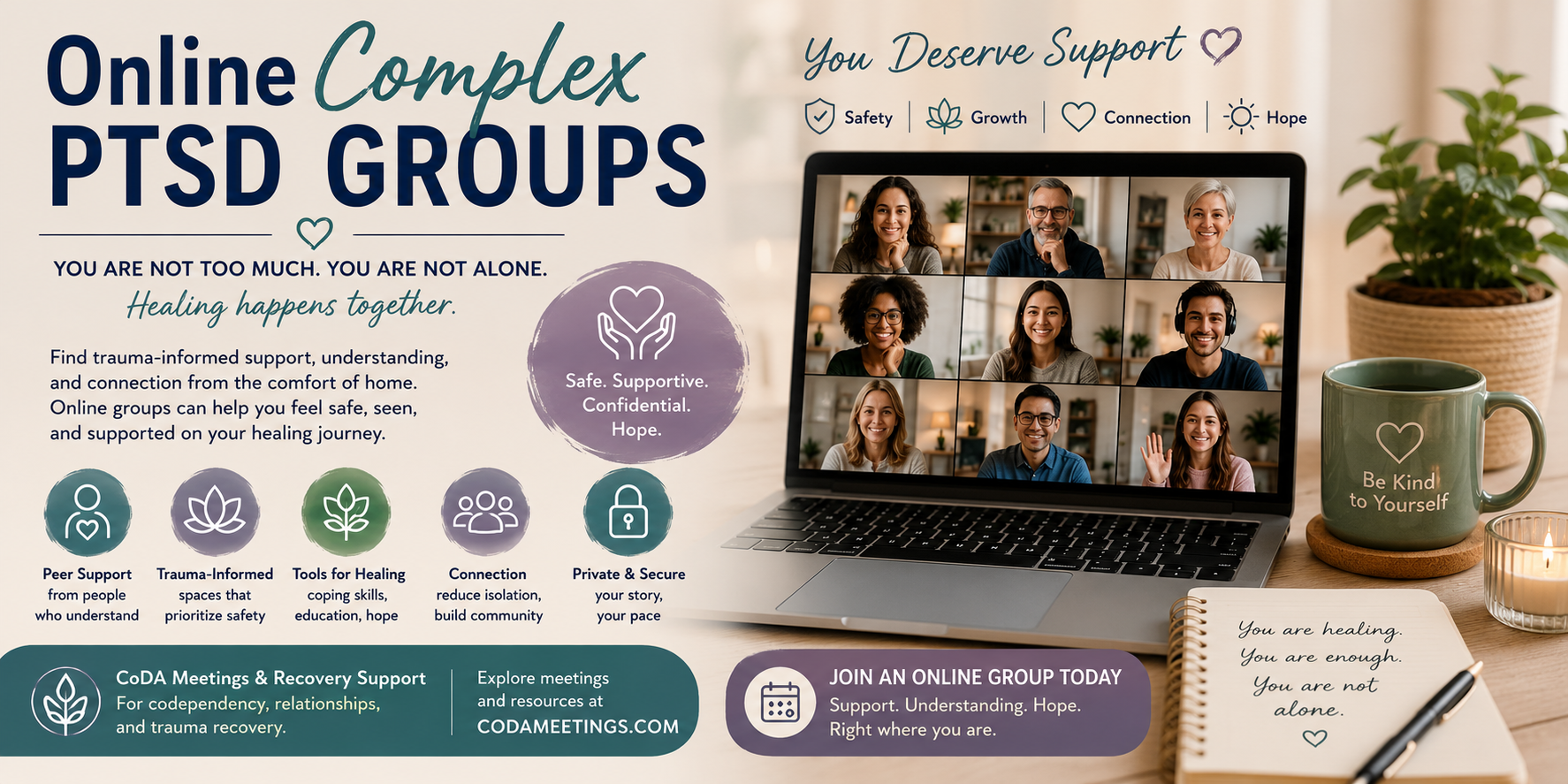
Online Complex PTSD Groups: Finding Support, Safety, and Codependency Recovery
A Gentle Place to Begin When Survival Has Become Exhausting
Complex PTSD can feel like living with an invisible alarm system that never fully turns off. Even when life looks calm on the outside, the body may still feel guarded, afraid, overwhelmed, or prepared for rejection. For many people, complex trauma does not come from one single event. It often grows from repeated emotional pain, unsafe relationships, neglect, abandonment, criticism, control, betrayal, or environments where love felt conditional.
When someone has lived through long-term emotional injury, relationships can become confusing. Love may feel unsafe. Boundaries may feel selfish. Silence may feel dangerous. Approval may feel like oxygen. This is where trauma and codependency often meet.
If you are searching for online complex PTSD groups, you may be looking for more than information. You may be looking for a place where your nervous system can exhale. A place where people understand why trust is hard, why boundaries feel terrifying, and why healing takes time.
You Deserve Support That Feels Safe
If complex trauma, codependency, or relationship anxiety has left you feeling alone, visit Codameetings.com to explore recovery resources, CoDA meetings, and emotional support tools.
Healing begins with one safe connection.
What Are Online Complex PTSD Groups?
Online complex PTSD groups are virtual support spaces for people healing from long-term trauma. These groups may include peer support, guided discussion, trauma education, emotional regulation tools, recovery readings, or shared reflection.
The National Center for PTSD explains that peer support groups can offer connection with others who have lived through traumatic experiences, and trained peer supporters may offer support, information, and resources. Online groups can be especially helpful for people who are not ready for in-person meetings or who need support from home. Source
Online complex PTSD groups are not a replacement for therapy, medical care, trauma treatment, or crisis services. But they can become a meaningful layer of support alongside professional help, CoDA meetings, journaling, spiritual practice, grounding skills, and safe community.
Why Complex PTSD Can Affect Relationships
Complex trauma often shapes how a person experiences closeness. If love was unpredictable, critical, neglectful, controlling, or unsafe, the nervous system may learn to scan constantly for danger. This can lead to people-pleasing, emotional caretaking, fear of abandonment, difficulty trusting, or staying in unhealthy relationships because being alone feels unbearable.
Some people respond to trauma by becoming overly responsible. They try to keep everyone calm. They apologize quickly. They avoid conflict. They become experts at reading other people’s moods while losing connection with their own feelings.
Others may withdraw, shut down, become numb, or feel disconnected from their body. Some move between both patterns: chasing closeness, then fearing it; wanting love, then feeling trapped by it.
Codependency recovery can help people begin asking new questions:
- What am I feeling right now?
- Is this fear from the present or the past?
- What boundary would protect my peace?
- Am I helping from love or rescuing from fear?
- Can I care about someone without abandoning myself?
How CoDA Meetings Can Support Codependency Recovery
CoDA meetings, also known as Co-Dependents Anonymous meetings, are peer-support recovery meetings for people who want healthier relationships. Many people who attend CoDA identify with patterns such as people-pleasing, rescuing, control, fear of rejection, emotional dependency, resentment, poor boundaries, or difficulty knowing who they are outside of relationships.
For trauma survivors, CoDA meetings can offer language for relational patterns that once felt confusing or shameful. A person may begin to see that codependency is not a character flaw. It is often a learned survival strategy. Recovery is the process of gently learning a new way to live.
In CoDA, members share experience, strength, and hope. The goal is not to diagnose, fix, or advise one another. The goal is to create a respectful recovery space where people can hear truth, practice honesty, and remember they are not alone.
Looking for Online Recovery Support?
Start by exploring online complex PTSD groups, CoDA meetings, and codependency recovery resources through Codameetings.com.
You can heal at your own pace, one meeting at a time.
How to Locate Online Complex PTSD Groups
Finding the right support group takes patience. Not every group will feel like the right fit, and that is okay. Your safety, comfort, and emotional readiness matter.
1. Search for Trauma-Informed Online Groups
Use search terms such as online complex PTSD groups, CPTSD support groups online, trauma recovery support groups, online PTSD peer support, or emotional support groups for trauma survivors.
2. Look for Clear Group Guidelines
A safer online group should explain its rules, privacy expectations, moderation style, and whether it is peer-led, professionally facilitated, or educational. Trauma-informed spaces should discourage shaming, blaming, graphic oversharing, pressure, advice-giving, or emotional dumping without consent.
3. Consider Peer Support Resources
The CPTSD Foundation offers virtual support environments for adult survivors of complex trauma, including daily recovery support and peer support chat options. Source
4. Explore PTSD and Mental Health Support Directories
The Anxiety and Depression Association of America offers free, anonymous peer-to-peer support communities for anxiety, depression, PTSD, and related concerns. Source
5. Add CoDA Meetings to Your Recovery Plan
If your trauma shows up strongly in relationships, CoDA meetings may help you explore codependency patterns, boundaries, emotional dependency, and self-abandonment. Visit Codameetings.com to begin exploring recovery resources.
What to Look for in a Healthy Online Support Group
A healthy group should help you feel respected, not pressured. You should never feel forced to share details before you are ready. You should not be told what to do with your relationships, your recovery, or your life. Support should feel grounded, compassionate, and choice-based.
Helpful online complex PTSD groups often include:
- Clear privacy guidelines
- Respectful moderation
- Trauma-informed language
- Permission to pass or simply listen
- No pressure to share graphic details
- Encouragement to seek professional support when needed
- Focus on emotional safety, grounding, and recovery
Complex Trauma, Shame, and the Need for Safe Connection
One of the deepest wounds of complex trauma is shame. Shame says, “Something is wrong with me.” Recovery says, “Something happened to me, and I can heal.”
Online support groups can help challenge isolation. When someone hears another person describe the same fear, the same freeze response, the same difficulty trusting, or the same pattern of losing themselves in relationships, shame begins to loosen its grip.
Healing does not happen by forcing yourself to be over it. Healing happens through safety, support, awareness, and repeated experiences of being respected.
When to Seek Immediate Help
If you are in crisis, feel unsafe, or are having thoughts of suicide or self-harm, do not wait for a support group. In the United States, call or text 988 or chat through the 988 Suicide & Crisis Lifeline. The Lifeline is available 24/7, and conversations are free and confidential. Source
Support groups can be powerful, but crisis care and professional support are important when safety is at risk.
Take One Gentle Step Today
You do not need to fix your whole life today. You only need one honest step toward support. Explore online complex PTSD groups, CoDA meetings, and recovery tools through Codameetings.com.
A New Relationship with Yourself
Complex PTSD recovery is not about becoming someone else. It is about returning to the parts of you that trauma taught you to hide. The part that has needs. The part that has a voice. The part that wants peace. The part that knows love should not require fear, self-erasure, or constant survival.
Codependency recovery invites you to build a new inner foundation. You begin learning that boundaries are not abandonment. Rest is not laziness. Saying no is not cruelty. Having needs does not make you too much. Wanting safe love does not make you weak.
Online complex PTSD groups can offer connection. CoDA meetings can offer recovery structure. Therapy can offer clinical support. Together, these tools can help you move from survival toward self-trust.
You are not too broken to heal. You are not too late. You are allowed to begin again.
Frequently Asked Questions About Online Complex PTSD Groups
What are online complex PTSD groups?
Online complex PTSD groups are virtual support spaces for people healing from long-term trauma, emotional neglect, unsafe relationships, or repeated traumatic experiences.
Are online complex PTSD groups therapy?
No. Most online groups are peer-support or educational spaces. They are not a replacement for therapy, medical care, trauma treatment, or crisis support.
Can CoDA meetings help with complex trauma?
CoDA meetings may help people explore relationship patterns connected to trauma, such as people-pleasing, poor boundaries, rescuing, control, and fear of abandonment.
How do I find online complex PTSD groups?
Search for CPTSD support groups online, trauma-informed peer support, online PTSD support groups, or complex trauma recovery groups. Review each group’s guidelines before attending.
What should I look for in a trauma-informed group?
Look for clear privacy rules, respectful moderation, permission to pass, no pressure to share details, and a focus on emotional safety.
Can I attend if I do not have an official diagnosis?
Many peer-support spaces welcome people who relate to trauma symptoms, but each group has its own guidelines. Professional diagnosis and treatment should come from qualified providers.
Are online support groups private?
Privacy depends on the group platform and rules. Always review confidentiality guidelines and avoid sharing details that feel unsafe or too personal.
What should I do if I feel unsafe or in crisis?
If you are in the United States and feel unsafe or are having thoughts of suicide or self-harm, call or text 988 or use the 988 online chat for immediate crisis support.